
Guided Imagery and Music: Music as a Pathway to Inner Experience

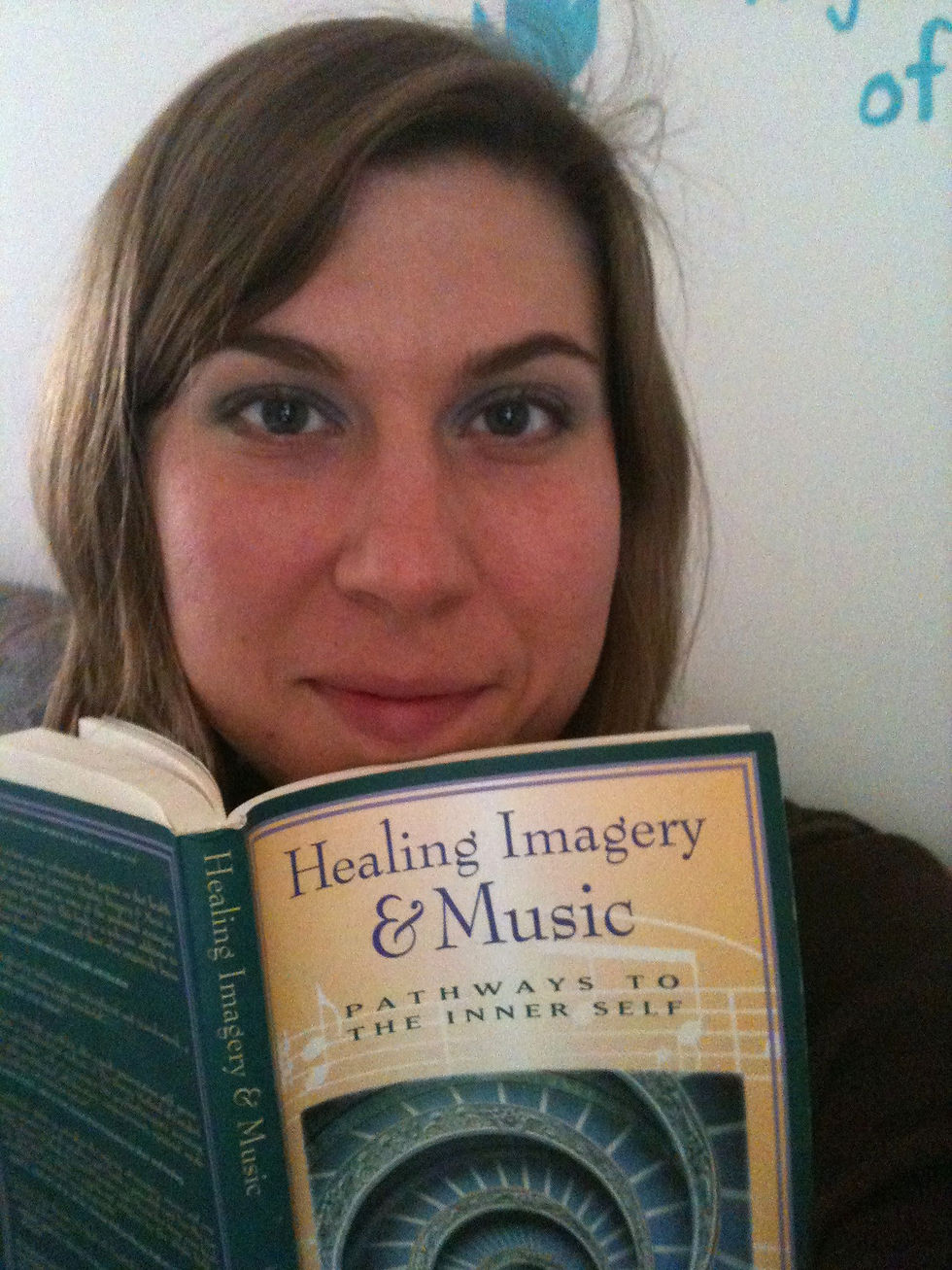
Since 2013, I’ve been training in the Bonny Method
of Guided Imagery and Music (GIM)—a lifelong learning process that has taken me to retreat centers in the mountains of Virginia and North Carolina, and even a monastery in Indiana. More recently, our international cohort has met online, allowing this work to continue across distance and time.
Friends often ask, “Will you ever be done with your GIM training?” or “Why would you study something that takes so much work?” The answer lies in what GIM truly is, and how deeply it connects to healing, transformation, and the expansion of consciousness.
What Is GIM?
Guided Imagery and Music is a form of music therapy developed by Helen Bonny, a music therapist and consciousness researcher who designed music programs for LSD-assisted psychotherapy studies at the Maryland Psychiatric Research Center in the late 1960s and early 1970s. Through her work, Bonny discovered that music alone—without drugs—could evoke profound “mind-manifesting” (psychedelic) experiences.
From these discoveries, she developed the Bonny Method of Guided Imagery and Music, a structured yet deeply intuitive approach that continues to evolve today through international organizations such as the Association for Music and Imagery and the European Association for Music and Imagery.
My First Encounter with GIM
When I first encountered GIM as a music therapy student at the University of Louisville, I didn’t get it. Listening to Debussy’s Prelude to the Afternoon of a Faun with my eyes closed seemed… boring. I noticed a faint image of an ancient fountain, but without a framework to explore it, my curiosity ended there.
Years later, through Jungian-oriented dreamwork, I began to recognize the depth of this kind of imagery work. I realized that GIM offers a direct way to dialogue with the unconscious—and that it can be truly life-changing.
How a GIM Session Works
A GIM session begins by helping the listener enter a relaxed, receptive state—eyes closed, body comfortable, attention turned inward. Breathing, guided relaxation, and awareness of the body all help shift from ordinary waking consciousness to a more non-ordinary, yet natural, state of openness.
From there, the music begins. The listener is invited to notice what the music evokes—images, sensations, feelings, memories, or symbolic experiences—and to describe these as they arise. The therapist acts as a guide, not directing the imagery but supporting the process and helping the person stay connected to the unfolding inner journey.
The music itself becomes the bridge between the conscious and unconscious mind, carrying emotional, somatic, and spiritual material into awareness—much like what can happen in psychedelic therapy.
GIM and Psychedelic Therapy: Parallels in Inner Exploration
Both GIM and psychedelic therapy invite people to enter expanded states of consciousness and connect with their inner healing intelligence. Each relies on music as a catalyst and the therapeutic presence of the guide, creating conditions for self-discovery, emotional release, and insight.
GIM can serve as a psychedelic-adjacent or integrative modality, offering a safe, substance-free way to access similar realms of imagery, affect, and meaning. Many clients who explore psychedelic therapy find GIM helpful for preparation or integration, as it allows the psyche to continue unfolding material that emerges in non-ordinary states.
The Levels of GIM: Supportive, Re-educative, and Reconstructive
GIM can meet clients at different levels of depth:
Supportive – Focused on relaxation, self-soothing, and reconnecting with inner resources. The music helps stabilize the nervous system and restore a sense of safety.
Re-educative – Encourages self-reflection, insight, and new patterns of understanding. The music and imagery help reframe old beliefs and open new perspectives.
Reconstructive – Works with deep emotional and symbolic processes. Imagery may evoke transformative encounters with the unconscious, integrating fragmented parts of the self.
These levels mirror the range of experiences in psychedelic therapy—from grounding and supportive to deeply reconstructive and transpersonal.
Example: A Journey Through Music and Imagery
Examples often speak louder than words. This short video beautifully demonstrates the essence of GIM—the way music and imagination weave together to create a living, unfolding inner journey:🎥 Watch the video on YouTube
Closing
Whether within traditional therapy, psychedelic integration, or personal exploration, GIM offers a way to listen inwardly—to the psyche, the body, and the music that moves between them. It reminds us that healing can arise not from doing, but from allowing: allowing music to carry us where words cannot go.
If you’re curious about how Guided Imagery and Music could support your own healing or integration process, I welcome you to reach out. I offer sessions both in person and online, creating a safe space to explore the inner landscapes that music reveals.
→ Learn more or schedule a consultation at musicpsychotherapy.org
Comments